AI pulse last 7 days
Daily AI pulse from YouTube, blogs, Reddit, HN. Ruthlessly filtered.
Sources (41)▶
- criticalAndrej Karpathy
Były dyrektor AI w Tesli, OpenAI cofounder. Każde video to gold.
- criticalAnthropic
Oficjalny kanał Anthropic. Każdy release Claude'a.
- criticalComfyUI Blog
Release log dla integracji ComfyUI — Luma Uni-1, GPT Image 2, ACE-Step music gen, Seedance. Pokrywa video+image+music+workflow.
- criticalOpenAI Blog
Oficjalny blog OpenAI. Wszystkie release.
- criticalSimon Willison's Weblog
Najlepszy 'thinker' AI. Codzienne posty, deep insights, niska hype rate.
- highAI Explained
Głęboka analiza papers i benchmarków, niska hype rate.
- highAI Jason
Praktyczne tutoriale Claude Code, MCP, workflow vibe codingu.
- highBen's Bites
Daily AI digest, creator-friendly tone. Codex, model releases, agentic AI.
- highCole Medin
Vibe coding + agentic workflows + Claude Code MCP integrations.
- highFal AI Blog
Fal hostuje większość nowych AI image/video modeli — ich blog to wczesne sygnały premier.
- highHN: 3D & Gaussian Splatting
HN signal dla 3D generative — Gaussian Splatting, NeRF, image-to-3D. Próg 20 bo niszowa kategoria (top historic 182pts).
- highHN: AI agents / MCP
HN posty o agentach, MCP, vibe codingu z min 100 pkt.
- highHN: Claude / Anthropic
HN posty z 'Claude' lub 'Anthropic' z min 100 pkt.
- highHugging Face Blog
Releases dla image, video, audio, 3D modeli. Część tech-heavy — Gemini relevance odfiltruje noise. Downgraded z critical: za duży volume na 'must-read' status.
- highIndyDevDan
Claude Code power user, prompty, hooki.
- highInterconnects (Nathan Lambert)
AI policy + research analysis. Niska hype rate, opinionated.
- highLatent Space
Podcast + blog Swyx — wywiady z founderami i deep dives engineeringowe.
- highMatt Wolfe
Comprehensive AI tools weekly digest. ~700K subs.
- highMatthew Berman
AI news, model release reviews, agent demos. Wysoki output.
- highr/aivideo
Community AI video — Sora, Veo, Runway, Kling, LTX. Co naprawdę zaskakuje twórców.
- highr/ClaudeAI
Społeczność Claude'a — power users, tipy, problemy.
- highr/LocalLLaMA
Open-source LLMs, lokalne uruchamianie, benchmarks bez hype.
- highr/StableDiffusion
Największa community open-source image gen (700k+ users). Premiery modeli, LoRA, ComfyUI workflows.
- highRiley Brown
Vibe coding, AI builder workflows, Cursor + Claude tutorials.
- highThe Decoder
Niemiecki AI news outlet po angielsku, dobre breaking news.
- highTheo - t3.gg
TypeScript + AI dev workflows. Hot takes, narrative-driven.
- highYannic Kilcher
Paper reviews i deep dives w research AI.
- lowAI Weirdness
Janelle Shane — playful AI experiments, image gen quirks. Niski volume, unikalna perspektywa.
- mediumbycloud
AI papers digestible — między 2MP a Yannic Kilcher.
- mediumCreative Bloq
Design industry — gdzie AI ingeruje w klasyczne dyscypliny graficzne.
- mediumFireship
100-sec format, often AI/LLM + tech news.
- mediumfxguide
VFX i film industry — coraz więcej AI w pipeline. Profesjonalna perspektywa.
- mediumGreg Isenberg
Solo founder vibe — buduje produkty z AI, podcasty z indie hackers.
- mediumr/ChatGPTCoding
Vibe coding tipy, IDE setupy, prompty. Mix wszystkich modeli.
- mediumr/comfyui
ComfyUI workflows — custom nodes, JSON workflows, optymalizacje.
- mediumr/midjourney
Midjourney community — premiery v7+, style references, prompt patterns.
- mediumr/runwayml
Runway-specific community — premiery features, prompt patterns, comparisons z konkurencją.
- mediumr/SunoAI
Suno music gen community — nowe wersje modelu, lyric prompting techniques. Audio AI ma slaby RSS ecosystem.
- mediumTina Huang
AI workflows for data science, practical applications.
- mediumTwo Minute Papers
Krótkie streszczenia papers AI, świetne dla szybkiego scan'a.
- mediumWes Roth
AI news z bardziej clickbaitowym tonem — filtr Gemini odsiewa hype.

Elon doubled limits
Free ChatGPT users gain a much more capable GPT-5.5 Instant model and spreadsheet integration, while paid Claude users can now utilize twice as much capacity and leverage new agen…
OpenAI has rolled out GPT-5.5 Instant to all free ChatGPT users, offering substantial improvements in vision, PDF comprehension, web search, and memory, alongside a 52.5% reduction in hallucinations compared to its predecessor. Additionally, ChatGPT now directly integrates with Excel and Google Sheets, enabling users to build sheets, analyze data, and generate formulas within spreadsheets. Anthropic has also significantly boosted its offerings, doubling the usage limits for all paid Claude plans by leveraging SpaceX's Colossus 1 data center. Furthermore, Claude Managed Agents received new capabilities like "Dreaming" for memory, "Outcomes" for success grading, and "Multi-agent orchestration." These developments collectively enhance accessibility and power for both free and paid AI users,…
Ben's Bites·news·05/07/2026, 01:03 PM
OpenAI built a networking protocol with AMD, Broadcom, Intel, Microsoft, and NVIDIA to fix AI supercomputer bottlenecks
OpenAI and tech giants released MRC, an open-source protocol that makes training massive models faster and cheaper by optimizing how 100,000+ GPUs communicate.
OpenAI, in collaboration with industry leaders like NVIDIA, Microsoft, and AMD, has introduced MRC (Multi-Path Remote Communication), an open-source networking protocol designed for AI supercomputing. The protocol addresses the massive data bottlenecks inherent in training LLMs across tens of thousands of GPUs. By enabling data transmission across hundreds of paths simultaneously, MRC reduces the required network switch layers from four down to just two. This architecture supports clusters of over 100,000 GPUs while significantly lowering power consumption and hardware costs. Currently, the protocol is operational within OpenAI's Stargate supercomputer project, signaling a shift towards more efficient, standardized AI infrastructure.
The Decoder·tooling·05/06/2026, 07:13 PM·Matthias Bastian
ChatGPT ads are now open to small businesses as OpenAI builds a full self-serve ad platform
OpenAI is democratizing access to ChatGPT advertising by removing the $50k entry barrier and launching a self-serve platform for smaller businesses.
OpenAI has officially launched its self-serve advertising platform for ChatGPT, initially targeting the US market. This move removes the previous $50,000 minimum budget requirement, making the platform accessible to small and medium-sized businesses. The company aims to generate $2.5 billion in ad revenue this year, signaling a major shift in its business model. Advertisers can now book placements directly, which will likely change the user experience for free-tier ChatGPT users. This transition mirrors the evolution of search engines into ad-driven platforms, marking a new era for LLM monetization.
The Decoder·news·05/06/2026, 01:28 PM·Maximilian Schreiner
[AINews] Silicon Valley gets Serious about Services
OpenAI released GPT-5.5 Instant as the new ChatGPT default, while major AI labs are pivoting to professional services to help enterprises deploy agents at scale.
OpenAI has launched GPT-5.5 Instant, a major upgrade in factuality and image understanding, now the default for ChatGPT. Simultaneously, OpenAI and Anthropic are launching multi-billion dollar service joint ventures with private equity firms like Blackstone and Bain Capital. These entities will handle the "last mile" of enterprise AI deployment, focusing on systems integration and workflow modernization. For developers, OpenAI released an Agents SDK for TypeScript, and Cursor introduced automated CI failure fixing. Meanwhile, Meta's new ProgramBench reveals that AI still struggles to generate entire software repositories from scratch, scoring 0% on perfect end-to-end generation of complex projects.
Latent Space·news·05/06/2026, 05:40 AM
Claude BROKE Wall Street Overnight...
Anthropic and OpenAI are partnering with Wall Street giants to create 'AI deployment machines,' signaling a shift from experimental tools to massive enterprise automation.
Wes Roth discusses a major shift in AI deployment as Anthropic announces a $1.5 billion joint venture with Blackstone, Goldman Sachs, and other financial giants to integrate AI into enterprise systems. OpenAI is reportedly following suit with a $10 billion 'Development Company' venture. Roth argues that the 'AI bubble' narrative is collapsing as these partnerships provide the infrastructure and capital needed to overcome implementation hurdles. He highlights that while tools like Claude Code provide the scaffolding, the real driver is the exponential growth in model capabilities. This move marks the transition from experimental AI use to large-scale, institutionalized automation across various industries.
Wes Roth·news·05/06/2026, 12:17 AM·Wes Roth▶Watch here
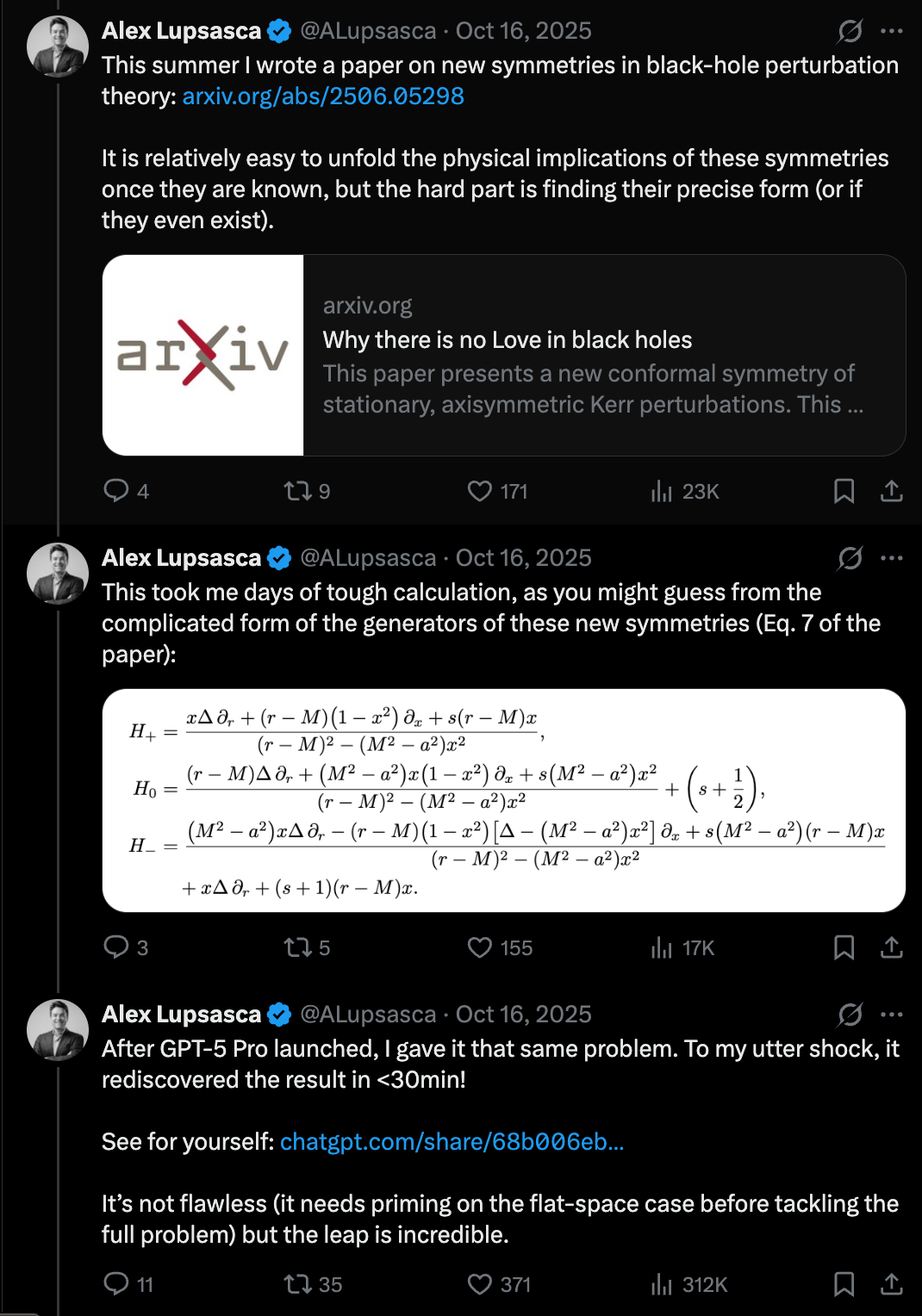
🔬Doing Vibe Physics — Alex Lupsasca, OpenAI
LLMs are hitting a "Move 37" moment in science, solving complex theoretical physics problems in minutes that previously took researchers months.
Alex Lupsasca, a renowned theoretical physicist and Breakthrough Prize winner, discusses his transition to OpenAI to lead scientific reasoning efforts. He highlights a paradigm shift where LLMs like GPT-5 are no longer just improving at mundane tasks like email, but are making breakthroughs at the "scientific frontier." Lupsasca shares how the model reproduced his complex research paper in 11 minutes and later helped derive a new result in theoretical physics regarding gluon tree amplitudes. This suggests that AI is becoming a legitimate partner in high-level mathematical and physical discovery, moving beyond simple pattern matching to genuine reasoning in complex domains.
Latent Space·news·05/05/2026, 08:34 PM
ChatGPT update rolls out GPT-5.5 Instant with fewer hallucinations and more personalized answers
GPT-5.5 Instant is now the ChatGPT default, offering a 50% reduction in hallucinations and new 'memory sources' for better transparency.
OpenAI has replaced the default ChatGPT model with GPT-5.5 Instant, emphasizing reliability and transparency. Internal benchmarks report a 52.5% reduction in hallucinations for high-risk topics like medicine and law. A new feature called 'memory sources' has been introduced, allowing users to see exactly which stored context or past interactions influenced a specific response. While the model is rolling out to all users immediately, advanced personalization features involving Gmail and file integration are currently exclusive to Plus and Pro subscribers. This update marks a significant step in grounding LLM outputs in verifiable user data.
The Decoder·model_release·05/05/2026, 06:04 PM·Matthias Bastian
OpenAI's first hardware play might be a phone that replaces your app grid with an agent task stream
OpenAI is reportedly building a smartphone for 2027 that replaces traditional apps with an AI agent-driven interface.
OpenAI is reportedly developing its own AI-centric smartphone, moving away from experimental form factors like pins or pendants in favor of a proven device category. According to analyst Ming-Chi Kuo, the device will feature chips from MediaTek and Qualcomm, with manufacturing handled by Luxshare. Mass production is slated for the first half of 2027, targeting 30 million units in its first two years. The core innovation is a shift from the traditional app grid to an agent task stream, where AI agents handle workflows directly. This move signals OpenAI's intent to control the full hardware-software stack and challenge the mobile OS dominance of Apple and Google.
The Decoder·news·05/05/2026, 05:14 PM·Matthias BastianUnlocking large scale AI training networks with MRC (Multipath Reliable Connection)
OpenAI open-sources MRC, a networking protocol designed to make massive AI training clusters more stable and efficient by handling hardware failures gracefully.
OpenAI has introduced Multipath Reliable Connection (MRC), a networking protocol specifically engineered for the demands of large-scale AI training. Released through the Open Compute Project (OCP), MRC addresses the brittleness of current Ethernet and InfiniBand setups when scaling to tens of thousands of GPUs. The protocol allows for multiple paths between nodes, ensuring that a single link failure doesn't crash the entire training job. This shift aims to reduce downtime and improve overall cluster utilization during the months-long training runs of frontier models. By open-sourcing it, OpenAI invites the broader industry to adopt a more resilient standard for supercomputing infrastructure.
OpenAI Blog·tooling·05/05/2026, 10:00 AM
GPT-5.5 Instant: smarter, clearer, and more personalized
OpenAI updates ChatGPT with GPT-5.5 Instant, offering higher accuracy, fewer hallucinations, and better personalization for daily use.
OpenAI has officially released GPT-5.5 Instant, positioning it as the new standard model for ChatGPT. The update emphasizes improved reasoning capabilities and a notable decrease in hallucination rates for factual queries. A key addition includes more granular personalization controls, giving users better agency over the model's tone and memory. This release bridges the gap between major version leaps, focusing on speed and reliability for high-frequency tasks. It represents OpenAI's continued push to make LLM interactions feel more natural and context-aware.
OpenAI Blog·model_release·05/05/2026, 10:00 AM
GPT-5.5 Instant System Card
OpenAI releases technical documentation and safety benchmarks for GPT-5.5 Instant, highlighting improved reasoning and low-latency performance.
OpenAI has published the System Card for GPT-5.5 Instant, a new iteration in their model lineup focused on speed and efficiency. The document details the safety evaluations, red-teaming efforts, and performance benchmarks conducted before the public rollout. Key highlights include significant improvements in reasoning capabilities compared to previous small-scale models. The report also addresses potential risks such as bias and misuse, outlining the mitigation strategies implemented. This release marks a shift towards more transparent reporting on model behavior and safety guardrails for high-speed LLM applications.
OpenAI Blog·model_release·05/05/2026, 10:00 AM
White House briefed Anthropic, Google, and OpenAI on plans for a government AI review process
The US government is considering mandatory pre-release reviews for major AI models, potentially slowing down the rapid pace of frontier model releases.
The White House has briefed major AI labs, including Anthropic, Google, and OpenAI, on a potential executive order requiring government review of new models before public release. This marks a significant shift from the previous year's deregulatory stance. The move was reportedly triggered by concerns surrounding Anthropic's upcoming "Mythos" model. The proposed review process aims to assess safety and national security risks before deployment. While details are still being discussed, this could introduce a formal gatekeeping layer for frontier models. Such regulation would impact how quickly developers can access the latest state-of-the-art capabilities.
The Decoder·news·05/05/2026, 09:53 AM·Maximilian Schreiner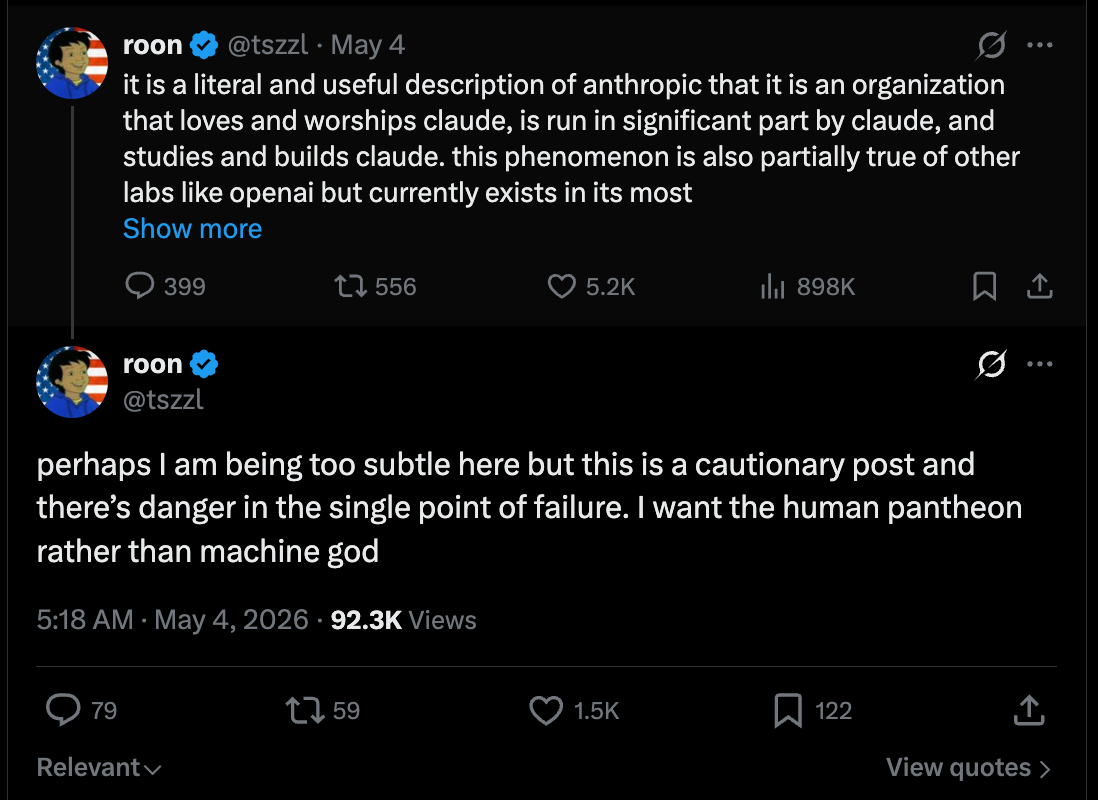
[AINews] The Other vs The Utility
Claude is evolving into a 'moral guide' that users respect, while GPT remains the 'judgment-free tool' preferred for raw utility and private tasks.
Sierra has reached a $15B valuation with an estimated $200M ARR, signaling the massive commercial success of enterprise AI agents. Beyond the numbers, a new philosophical divide is emerging between frontier models: Claude is increasingly viewed as 'The Other'—a moral entity with a distinct character and 'soul' that users respect or even fear being judged by. In contrast, GPT is treated as a 'Utility' or a logical prosthesis, a tool used for raw tasks where no judgment is desired. This distinction stems from Anthropic's 'Constitutional AI' approach versus OpenAI's focus on non-judgmental utility. The debate highlights a future where users choose models based on whether they need a conscientious partner or a silent, efficient tool.
Latent Space·opinion·05/04/2026, 11:29 PM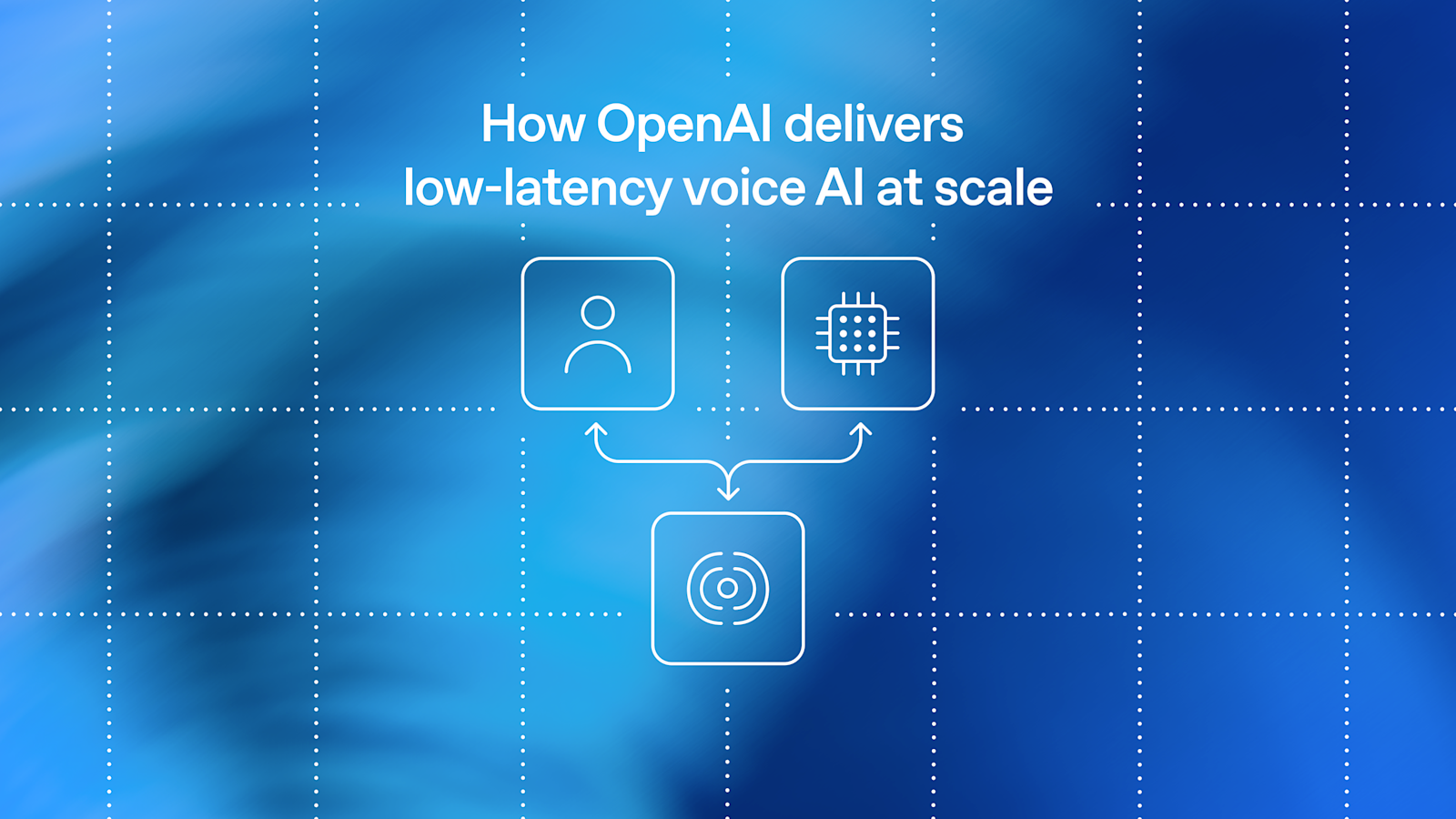
How OpenAI delivers low-latency voice AI at scale
Learn how OpenAI optimized WebRTC and global infrastructure to achieve near-human latency and fluid turn-taking in real-time voice interactions.
OpenAI provides a technical deep dive into rebuilding their infrastructure to support Advanced Voice Mode with minimal latency. They transitioned to a custom WebRTC-based stack to handle real-time audio streaming and complex conversational turn-taking across a global scale. The post explains how they manage traffic by routing users to the nearest data centers to reduce round-trip times. They also detail the challenges of integrating multimodal models into a single pipeline to allow for natural interruptions. This architectural shift marks a move away from traditional turn-based systems toward fluid, human-like dialogue.
OpenAI Blog·news·05/04/2026, 12:00 AM
Codex Replaced Claude for Me… Here’s Why
OpenAI's Codex is winning the 'super app' race by unifying coding and knowledge work into one tool, while Anthropic's ecosystem suffers from fragmentation.
The video explores the 2026 AI landscape where OpenAI’s Codex is challenging Anthropic’s dominance by offering a unified 'super app' experience. While Anthropic led early 2026 with rapid feature releases, its ecosystem became fragmented across separate tools like Claude Code and Co-work, creating friction for users. OpenAI pivoted by merging its efforts into Codex, which excels at both 'vibe coding' and general knowledge work through a single, intuitive GUI. The discussion highlights a major shift: a great coding model is now recognized as the best general-purpose model for all knowledge work. Additionally, the 'OpenClaw' craze has caused a global Mac Mini shortage, signaling a massive move toward running local AI agents.
Riley Brown·tooling·05/02/2026, 08:35 PM·Riley Brown▶Watch here
[AINews] Agents for Everything Else: Codex for Knowledge Work, Claude for Creative Work
OpenAI's Codex and Anthropic's Claude are expanding beyond code into general knowledge work and creative apps like Adobe and Blender.
OpenAI has repositioned Codex as a "SuperApp" for general knowledge work, moving beyond its coding origins. The update includes a 42% faster Computer Use Agent (CUA), a dynamic UI that adapts to tasks, and deep integrations with Microsoft, Google, and Salesforce suites. Meanwhile, Anthropic has launched Claude Security for code reviews and significantly expanded Claude's reach into creative software. New integrations allow Claude to interact with tools like Blender, Adobe Creative Cloud, Ableton, and Canva. This shift marks a transition where AI agents are no longer just for developers but are becoming general-purpose assistants for any computer-based task.
Latent Space·tooling·05/01/2026, 04:53 AM
Relevance auto-scored by LLM (0–10). List shows top 30 from the last 7 days.